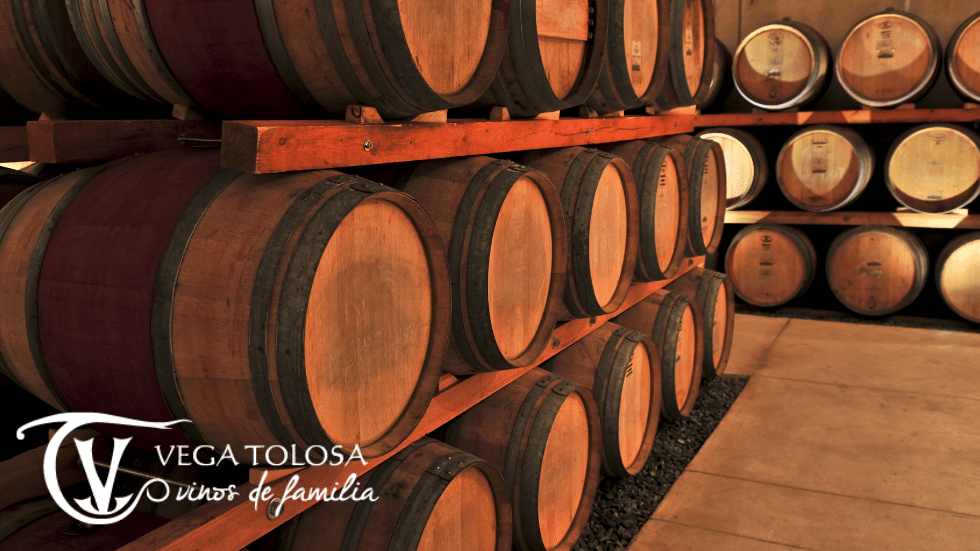
Aging or reservation, in barrels or in bottles, perhaps few production processes provoke such heated debates among supporters of one type of wine or another, such as the wine ageing. When we have just discovered the magical world of wine, we only have dubious ideas about it, but over the years we become fans of one or another type of aging. Every head, its sentence, but it is important that everyone can relax after a hard day with a glass of wine, the aging of which seems more adorable. By the way, if you choose La Manchuela wines, their high quality will always live up to your expectations.
So, What exactly is wine aging? It is a process of aging and maturation of a wine to get the best aromas and nuances, either in barrels or in the bottle itself. We already know that there are classifications of wines by colour – red, white and rosé; by the quantity of sugar – dried, semi-dry, semi-sweet and sweet. Now the time has come for the classification of wines by ageing.
According to this criterion, the wines are divided into jocome, raise, reserve and gran reserva. If we had to focus on a single word, we could say that the main condition is the time. This classification of the wines in reference to the time of maturation and aging that has been given to them in the winery is typical of Spain, so we will only find it in wines of Spanish origin.
When we talk about Young Wine (or also of wine of the year), we take into account that this wine, as a general rule, has not had a process of aging or aging after alcoholic and malolactic fermentation, mainly in barrels, although it can also be in concrete tanks or clay jars. They are wines that practically, between 2 and 4 months after the harvest, are ready for consumption. The melody of the wine is composed of a precise interweaving of aromas and nuances.
In the glass, you definitely feel the predominance of the grape, complemented by fruity aromas: citrus fruits, tropical, with the addition of jam or jam. A different aftertaste is not excluded, with subtle notes of forest and garden fruits. This is the famous wine:Hoya del Carmen”, young red wine, made with the best Tempranillo grapes in the Vega Tolosa winery.
The wine of color lackza and violet edge and with intense aroma, red fruit and violets can be accompanied with qcreamy uesos, fish like cod to the pilpil, and meats like the casquería. It should be noted that young wine should be consumed at a temperature of 10 to 13 degrees in the case of young white and 17-18 C in the case of red. Overheating threatens rancidity and an acrid aroma, and hypothermia alters the taste.
Between young wines and aging there is one more category: semi-breeding or Oak. It is the wine that has spent less than 6 months in the barrel, but without reaching the ageing periods of the different regulatory councils. They cannot be classified as ‘breedings’, for which they would need 12 months of barrels but if they acquire aromas and wood flavours that make them more elegant and complex than wines without ageing. According to The Wine Dictionary, more and more wineries are putting semi-breedings on the market since, in general, quality is increased compared to young wines and placing them on the market requires less time (and money) than aging wines.
As for the wine of upbringing, reds of this category provide a total ageing of at least 24 months, of which at least 6 must be in barrels. In the case of white and rosé wines the minimum total maturation time falls to 18 months, at least 6 of which must be fulfilled in barrels. These wines can last from five to ten years, depending on the storage conditions. As it remains in barrels, this wine gains the nuances and aromas that wood gives it. The wine can last from five to ten years of life, depending on the storage conditions.
Wines reservation are those whose upbringing, for red wines, requires at least a period of 3 years. At least 12 months the wine remains in oak barrels. For whites and rosés the figure would be 24 total months of guarding, with a minimum of 6 that must pass in barrels. Like lreserve is the next stage of maturation of a wine, They have higher quality than aging because their aging time is longer but it does not have to be better than a young wine. According to Vinetur, the digital wine magazine, lThe difference between a white or rosé aging or reserve wine is that the latter is offered for sale from the third year onwards.
Finally, gran reserva presupposes the ageing of the wine for at least 60 months. In the case of red wines, these wines should spend at least 18 of those 60 months in barrels. In the case from white and rosé wines gran reserva, the total ageing time should not fall below 48 months, of which at least the first 6 months should be spent in barrels.
Wines gran reserva have a color intense, with expressive and complex flavor. This wine goes well with fish dishes, cheeses and foie gras. The wines of gran reserva It does not occur every year and has a high status and exclusivity.
The wine classification above will help you to address even more carefully the choice of your favorite drink. Whatever wine you choose, young, semi-breeding, aging, reserve or gran reserva, you can be sure that the wines of La Manchuela will reconfirm their high quality. On this earth you will never be wrong with the choice.



 EN
EN  ES
ES  DE
DE