Spain has a long tradition in the production of high quality wines, and one of the grapes that is receiving more and more attention is the Tardana (or Planta Nova) is a white variety native to the Spanish east (Valencia/Manchuela), noted for its long vegetative cycle, late ripening, pale yellow color and citrus aromas, being ideal for fresh wines and with great potential in natural or organic elaborations.
Origin and area:
Native to the Spanish Levant, common in Valencia and areas of La Manchuela such as Villatoya, Alborea and Casas Ibáñez.
The origins of the Tardana are not fully known, it is a very old variety that has been grown in the Levant area for generations.
It is usually grown in sandy soils, where it needs a lot of sunlight to help it mature, since as its name suggests, its meaning is late ripening.
It matures much later than other varieties, and this gives a peculiar character to the final wine.
Here in Manchuela, specifically in Casas Ibáñez, it had its splendor in the 80s, where farmers to extend the harvest days, saw this variety as a good alternative, since it matured much later. As winemaking it was not so important, since they were wines of low alcoholic strength and their price was lower than the others.
With the strong subsidized restructurings, almost everything started at the beginning of the century, since the price of red wine almost doubled its price to the wines of Tardana.
With the increase in the consumption of white wines, CLM’s Ministry of Agriculture included it in the subsidised restructuring plans, but in 2024 it was excluded from those plans.
Indeed, the Tardana variety (also known as Planta Nova) was excluded from the new calls for aid for the restructuring and conversion of vineyards in Castilla-La Mancha for the period 2024-2027.
The key points of this change have been, according to the Administration:
“Exclusion of aid: Although Tardana remains an authorised variety for cultivation in the region, it is no longer eligible to receive subsidies for replanting or change of variety within the restructuring plans coordinated by the Ministry of Agriculture, Livestock and Rural Development.
Technical reason: This decision usually responds to market criteria and the prioritisation of varieties with higher commercial demand or better adaptation to the strategic objectives of the Wine Sectoral Intervention (VSI).”
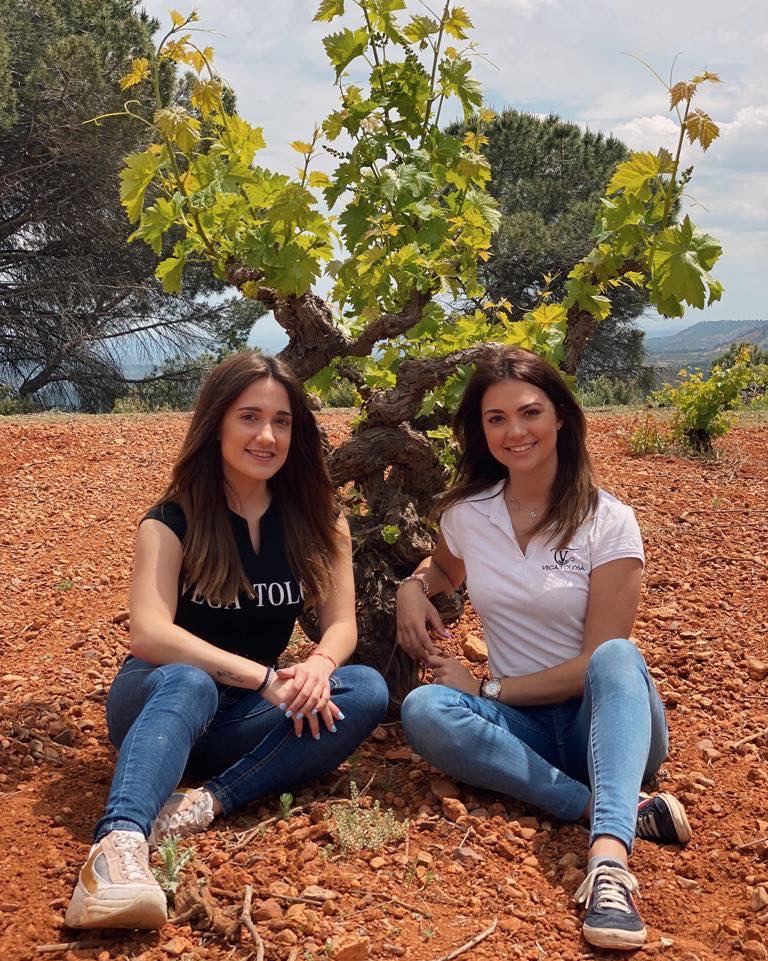
In 2022, Vega Tolosa made a great economic effort to rescue her, to look for isolated strains among the Bobal vineyards to multiply the buds and carry out a new plantation.
Today we do not understand the reaction of the Administration in trying to belittle an indigenous variety, Tardana, which has always been with us. And much more with the great future that awaits you: the high demand for white, low-alcohol and sparkling wines is the future.
Characteristics:
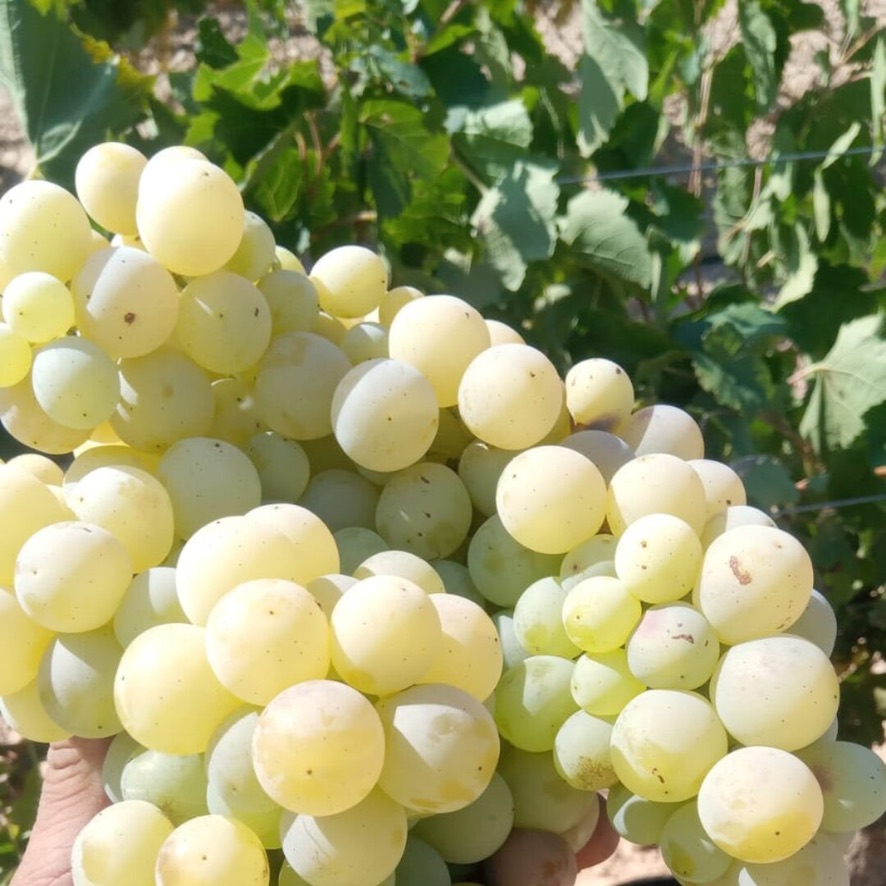
Grape with a long vegetative cycle (harvested at the end of October, hence ‘Tardana’), with medium bunches and small round berries.
It has the characteristic of a low sugar content, that means less alcohol in its elaboration; This allows us to be ideal for producing wines of low alcohol content, so demanded by today's consumer.
Another important feature is the production of sparkling wines, where its potential is found, as it is a grape that matures slowly throughout the autumn; not like chardonnay or macabre, which ripen rapidly in late July and early August.
Wine Profile:
It provides wines with good acidity, citrus aromas and tropical fruits, and a ‘slow drinking’ ‘charme’.
-Aromas: As already mentioned, Tardana wines have a very aromatic nose, with notes of white flowers, tropical fruits and fresh citrus fruits.
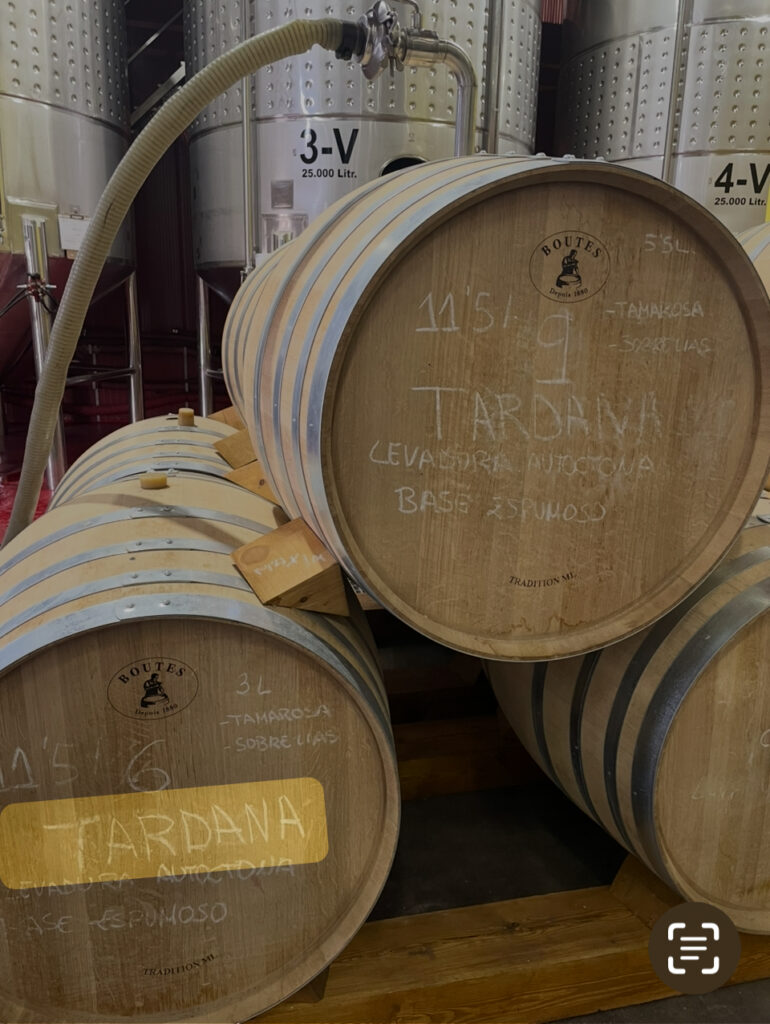
Its aroma can be more intense and complex if fermented in oak barrels, extraordinary in sparkling wines with the Champenoise Method.
-Color: Tardana wines are usually pale yellow, and have a beautiful golden tone that reflects wonderfully the sunlight. When they look at the light, they can have a slight greenish tint, which increases their visual appeal.
-Flavour: In the mouth they are fresh, with a touch of acidity, which makes them easy to drink alone, perfect to take on a warm summer day, or pair with light salads or seafood.
If fermented in oak barrels will give a little more structure, but without losing the varietal freshness.
For sparkling wines it will be where its maximum expression appears, fine bubble, good acidity, citrus and tropical aromas and of very prolonged flavor.
They have, a slight touch of smoked minerality, which adds an interesting layer of complexity to the sparkling wine.
The best pairings for Tardana wines.
They are incredibly versatile, and their light and fresh character make them an excellent choice for pairing with a wide variety of foods, as we have already said, it combines especially well with light seafood dishes, such as ceviche or grilled prawns.
It also pairs well with light salads, especially those with a slightly sweet dressing, as this can help highlight the wine's natural flavors.
Tardana wines and sparkling wines also combine well with chicken and pork dishes, as well as vegetarian dishes, such as stuffed peppers or parmesan aubergines. Very suitable for fresh cheeses and a wide variety of nuts and fruits.
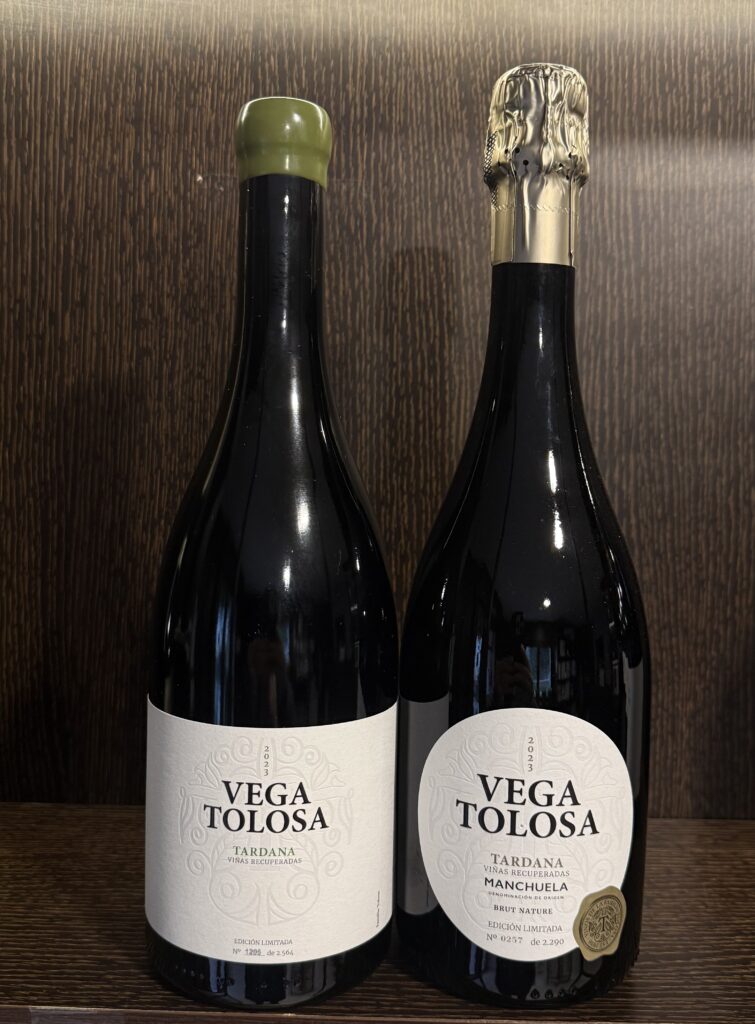
OUR WINE AND SPAMOUS TARDANA



 EN
EN  ES
ES  DE
DE