The enoturists that you visit us You always ask us this question, in Vega Tolosa Family Payments We were certified organic vineyards ten years ago, of these ten years, three were in conversion to eliminate all the chemical residues that we had added years ago.
To express what an organic or organic wine is, before making an organic wine we have to cultivate the vineyard in an ecological way, herbicides, pesticides and synthetic fertilizers are absolutely prohibited. The soil is protected with plant protections: remains of pruning and organic compost (for this we mix the scrapes of the grape with livestock manure), it will serve as fertilizer for the vine.
To prevent the attack of fungi (mildiu and oidium), preventive treatments of Bordeaux broth based on copper sulfate and sulfur in dust are used. Both products are totally ecological.
For moth attacks, sexual pheromone traps are used, in this way the males are not able to distinguish the females, avoiding fertilization.
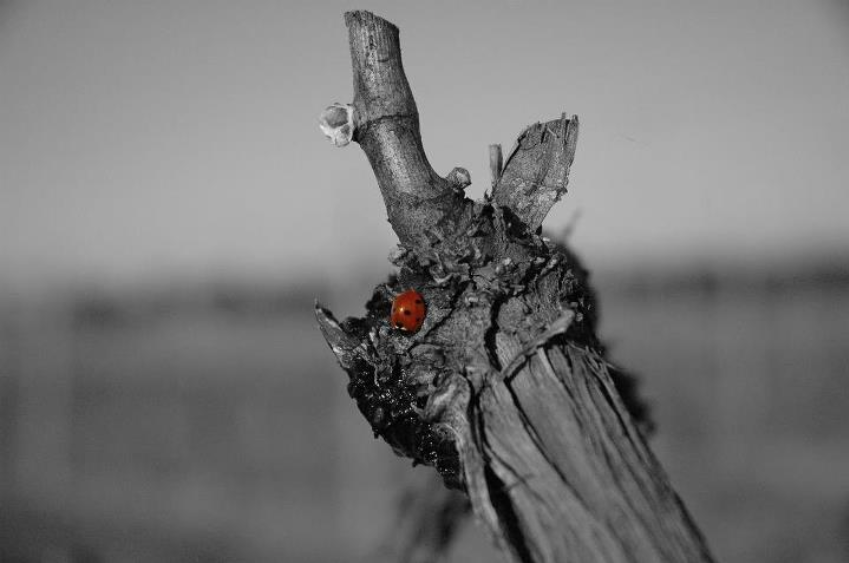
Another way we use is to plant aromatic plants among the vineyards, here the beneficial insects proliferate that will end up eating the harmful ones of the grape. In this way a natural biodiversity is created in the vineyard, where insects and plants can coexist.
The ecological concept considers that the application of chemicals in agriculture is responsible for a number of disorders. Already since the 70s of the last century, little by little a large sector of consumers began to ask themselves this type of questions, greatly increasing the interest in an ecological and alternative way of life.
Herbicides destroy the life of the soil, and prevent the vine from having a viable growth. The plant that sits on soils so treated attracts parasites and diseases. On the other hand, the treatment elements also cause alterations in the soil, losing the wines in idiosyncrasy.
Vegan wine. Another point to take into account is the elaboration of organic and vegan wine. There are no major differences between organic and traditional winemaking. The use of native or chosen, non-genetically modified yeasts, the use of cold, clarification by natural proteins or bentonites, filtration with filter earths and the restricted use of sulphur dioxide (sulfites) are authorised.
We carry since 2018 certifying our vegan wines.
The proportion of sulphur dioxide is practically the same as in traditional winemaking; International standards require it to have no more than 70mg per litre for red wines and 80mg for whites and rosés, levels that are rarely exceeded with appropriate techniques within the winery.
Natural wine. This campaign we have made wines without sulphites, for this the level of sulphur dioxide does not have to exceed 10mg per liter of wine. In this way they will be organic and natural wines.
The taste quality between a wine of these characteristics and a conventional one is similar; the difference is in the production process: is cleaner and enhances the safety of environmental quality. Both the production of grapes and the production of wine must be certified by private bodies, whose intervention in the process is like a third party not involved that carries out a follow-up to guarantee traceability and its organic character.
However, we must not forget something very important: Organic wine is first and foremost wine. They are sold not only because they are organic, but because they are quality wines, for the pleasure they provide and for the sensations they transmit.
If organic wines until a few years ago were attacked by numerous critics, an attitude explainable because they often offered an unconvincing quality, today things have changed. In many countries of the world there are more and more winegrowers who are willing to undertake this long process of conversion and comply with their strict production lines. The condition of organic, finally, is one more condition, which implies, above all, a commitment to the protection of health and, ultimately, respect for nature.
By Juan Miguel Tolosa.



 EN
EN  ES
ES  DE
DE